News
07/02/2023
Active detection of viral pneumonia
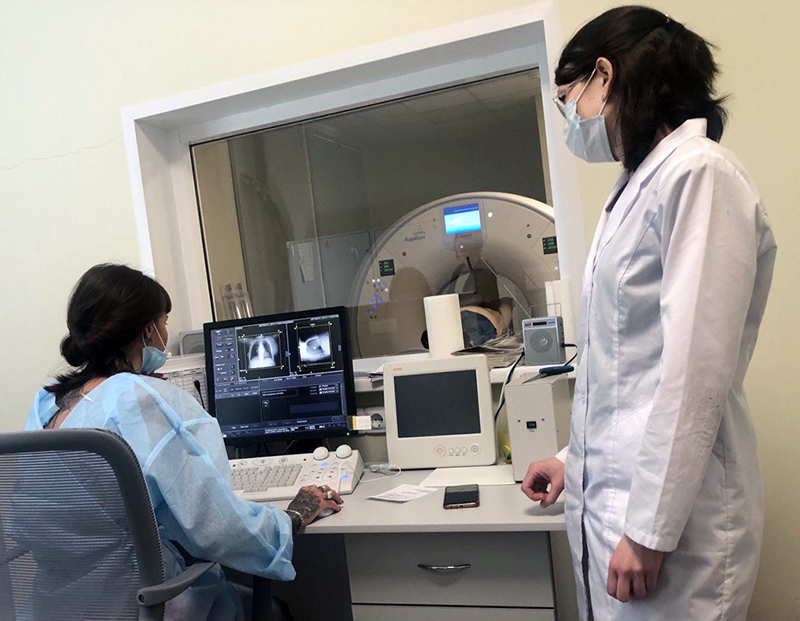
At the specialized COVID-19 hospital in Ivanovo, software from JSC YSAR+ was implemented on workstations for Toshiba and General Electric diagnostic equipment. These software includes "JEMYS: Radiological Digital Information System with Image Archiving Module" and "JEMYS: Telemedicine with Decision Support System for DICOM X-ray Image Analysis."
The system is built on the latest neural network algorithms, tested by leading specialists at Federal Scientific Medical Research Centers, and features a seamless integration mechanism that automatically identifies disease sites with visual highlighting. It also calculates ground-glass opacities, the area of consolidation areas, and the volume of fluid in the pleural cavities on a series of CT images. Automatic pre-population of a formalized protocol, taking into account the volume and percentage of detected pathologies, accelerates the process from the start of a patient's examination to the receipt of a doctor's report, which helps maintain high diagnostic throughput during periods of high workload and peak incidence.
During its operation in 2021-2022, the system recorded over two thousand cases of viral pneumonia (COVID-associated), as well as other chest pathologies.
The platform incorporates neural network algorithms and solutions for diagnosing not only viral pneumonia but also tuberculosis and lung cancer, and provides decision support for mammography examinations. The neural network algorithms used enable specialized protocols to generate medical reports, classify pathologies, and correctly route patients. The use of neural network data processing algorithms in a "second or third opinion" mode allows the head of the radiation diagnostics department to organize additional quality control without the need for human resources. Feedback provided by a neural network to physicians reviewing radiographic studies helps improve the skills of specialists, especially junior radiologists. When tuberculosis and oncological pathologies are detected on radiographs and fluorograms, a special algorithm recommends the appropriate patient classification and referral to a specialized clinic for further in-depth examination to confirm the preliminary diagnosis.
An integrated approach, combined with the use of neural networks and artificial intelligence algorithms, will reduce the number of errors made by radiologists during the initial review of studies, as well as increase the throughput of the radiology service and, consequently, the number of patients served.
Thus, under increased workload, physicians can more quickly and accurately identify patients with pneumonia (an chest pathology).